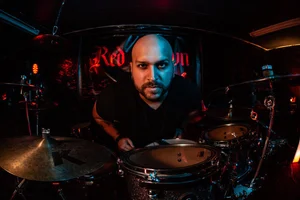
When the Crowd Loves It and You Don't
We played a show the other day. The crowd loved it — they sang along, asked for an encore — and I walked away frustrated.
This happens more often than people think, and I think it's worth talking about, because if you've only ever watched from the crowd, it's hard to imagine how different the experience can be from the other side of the stage.
What happened
The stage sound wasn't good. A bad monitor mix is one of the worst enemies a performer can have — when you can't clearly hear what you're playing (or what everyone else is playing), everything gets harder: timing, dynamics, chemistry. You end up playing "in the dark," guessing instead of feeling it.
To make things worse, the backing tracks didn't come through the P.A. That's a real problem: part of the arrangement simply never reached the crowd the way it was supposed to. From where I was standing, I knew exactly what was missing. But the audience doesn't know what they didn't hear — they only feel the end result, and apparently the result still worked for them.
Why the crowd loved it anyway
This got me thinking. The crowd isn't there to audit the mix — they're there to feel something. Stage energy, presence, groove, connection: that communicates even when the engineering falls short. It's almost ironic given our tagline, "feel it before you hear it" — because that's exactly what happened tonight, just for the wrong reasons.
As a musician, that's uncomfortable. We're trained (annoyingly so, but trained) to hear our own mistakes and technical issues before anything else. The standard I hold a performance to is a lot stricter than the standard of someone enjoying their night with a drink in hand.
The takeaway
None of this cancels out the show, or what the crowd felt — that was real, and it matters. But it doesn't cancel out what I felt on stage either. Both things are true at the same time.
Worth saying clearly: P.A. and sound reinforcement aren't the band's responsibility — that's on the venue's tech crew. We show up, we play, we give it everything we've got with what we're given. When the sound fails, it's frustrating, but it's not something we can just "fix by double-checking harder" next time — it depends on whoever's running the board.
So this ends up being more of an emotional reminder than a technical one: not every "good" night for the crowd is an easy one for whoever's on stage — and that's okay to feel, even when none of it was your fault.
What's actually in my control
When the stage monitor fails, one thing that helps (and that actually is in my control, unlike the P.A.) is having a solid in-ear as a backup. I use the BASN Bmaster — a triple-driver in-ear with detachable MMCX cables and strong sound isolation, built with musicians and audio engineers in mind — for exactly these situations. When the venue's board isn't cooperating, having your own audio reference in your ear changes everything. Link here if you want to check it out: [BASN Bmaster IEM](https://amzn.to/468S1Ig).
Disclosure: the link above is an affiliate link — if you buy through it, I earn a small commission at no extra cost to you.